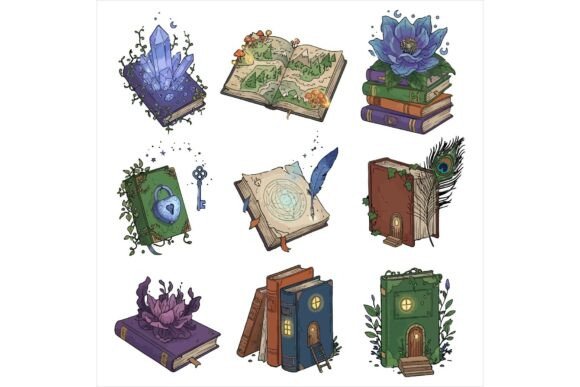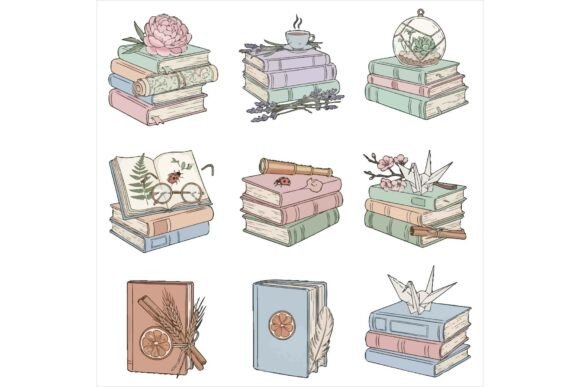
Whimsical Illustrations of Magical Books for Creative Sellers
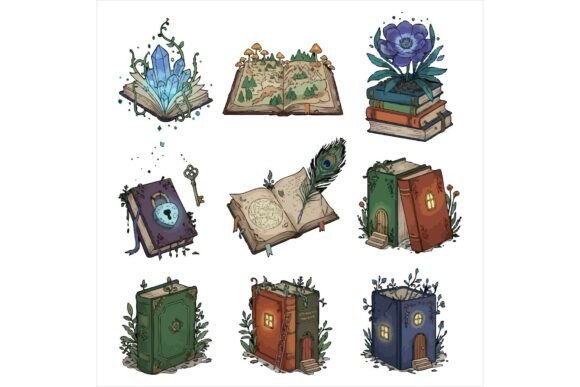
As a seasoned digital product creator with over a decade of experience selling on Etsy, print-on-demand platforms, and creative marketplaces like Creative Fabrica and Canva, I’ve reviewed countless graphic design assets. When it comes to Whimsical Illustrations of Magical Books, the first impression is clear: these illustrations are crafted for a niche that thrives on fantasy, charm, and storytelling. The style feels delicate yet bold—perfect for those who want to add a touch of enchantment without going over the top.
A Visual Style That Sparks Imagination
The mood of Whimsical Illustrations of Magical Books is undeniably magical. Think of a cozy bookshop tucked away in an enchanted forest or a spellbound library filled with ancient tomes. These illustrations have a soft, hand-drawn quality that gives them a personal and artistic feel, making them ideal for handmade businesses and sellers focused on brand identity with a fairy-tale twist.
They’re not your typical stock images; instead, they carry a visual personality that’s both whimsical and elegant. This makes them appealing to a wide range of audiences—from children's room decor enthusiasts to adult fans of fantasy novels and mystical themes. If you're targeting a premium or boutique-style customer base, these illustrations could be a great fit.
Who Might Be Interested?
- Etsy sellers creating themed printable collections
- Print-on-demand entrepreneurs designing t-shirts, mugs, and wall art
- Cricut users looking for unique SVG designs for stickers or home decor
- Canva template sellers aiming to offer seasonal or fantasy-themed templates
- Bloggers and content creators needing eye-catching visuals for posts or social media
- Scrapbooking kit designers seeking decorative elements for layouts
Testing the Asset Across Products
Before launching any new collection, I always test my graphic design assets across various use cases. With Whimsical Illustrations of Magical Books, I’d start by placing them on mockups for printable wall art and nursery prints. These are high-impact uses where the whimsy can really shine.
I’d also preview them as part of a planner sticker bundle or greeting card design, especially if the target audience includes teachers, students, or fans of self-care journals. The level of detail in each illustration is just right—not too intricate for cutting but enough to stand out visually.
For SVG products, I’d inspect the cut lines closely. The files seem well-structured, but because of the detailed textures and flourishes, some Cricut projects may require slight adjustments depending on the material being used. I’d recommend printing a sample on vinyl before committing to a full run.
When using the PNG version for t-shirt graphics or mug designs, I’d check how the colors translate in different lighting conditions. Some magical effects might lose their vibrancy when printed at scale, so color accuracy is key.
Product Mockup Previews
One of the best ways to evaluate a commercial design is by testing it on real product mockups. I’d render the illustrations on white, pastel, and dark backgrounds to see which combinations work best. For instance, a magical book illustration might pop beautifully on a light background but blend into darker ones unless contrast is adjusted.
It’s also important to simulate how the design will look in a marketplace listing. Will it stand out in an Etsy search? Does it maintain clarity when scaled down for thumbnails? These are practical questions every seller should ask when evaluating a new illustration asset.
Real Product Applications
Whimsical Illustrations of Magical Books are incredibly versatile. Here’s how I’d approach integrating them into different product types:
- SVG Designs: Ideal for Cricut projects such as custom book covers, planner embellishments, or even packaging labels. Just ensure the paths are clean and scalable.
- PNG Clipart: Great for digital paper packs, scrapbooking kits, and layered designs. The transparency allows for easy blending with other elements.
- Sublimation Projects: The intricate details work well on sublimation mugs, tumblers, and apparel, provided the resolution is high enough to retain crisp edges.
- Planner Stickers: The playful nature of the illustrations makes them perfect for weekly spreads, goal-setting pages, or magical-themed bullet journal prompts.
- Greeting Cards & Invitations: Pair one or two illustrations per card to create a sense of wonder and make the design feel exclusive and thoughtful.
- Canva Templates: These illustrations can enhance digital planners, blog headers, and promotional flyers with a dash of fantasy flair.
- Digital Downloads: Sell as standalone illustrations or include them in a design bundle with matching fonts and patterns for a cohesive offering.
Where It Shines
- Themed Bundles: Perfect for holiday collections, “Enchanted Libraries” sets, or autumn/winter seasonal bundles.
- Decorative Layouts: Especially effective in printable products like calendars, quotes, and posters where visual appeal is crucial.
- Merchandise Graphics: T-shirt, tote bag, and tumbler wraps benefit from the soft yet striking aesthetic of the illustrations.
- Social Media Promos: Use them as overlays in Instagram stories or Pinterest pins to grab attention quickly.
- Listing Images: They help establish brand consistency and visual hierarchy, especially when paired with serif or script fonts.
Use with Caution
While Whimsical Illustrations of Magical Books are beautiful, there are a few scenarios where they might not perform as well:
- Tiny Sticker Details: The fine linework can become unclear when resized too small.
- Overly Complex Layouts: Too many illustrations in one space can overwhelm the viewer and reduce perceived value.
- Low-Resolution Prints: Avoid using them on cheap, low-quality materials where the details won’t hold up.
- Crowded Thumbnails: Marketplace listings often need simplicity. A single illustration with negative space usually works better than multiple overlapping elements.
- Dark Backgrounds: Unless you tweak the color balance, some illustrations may appear muted or flat.
- Text-Heavy Templates: Let the illustrations breathe—don’t cram them around text or icons.
- Cutting Projects: While the SVGs look promising, double-check the cut quality for Silhouette or Cricut machines, particularly on textured materials.
Practical Seller Tips
Here’s what I’d do next after downloading Whimsical Illustrations of Magical Books:
- Test the SVG design on a Cricut project using different materials (vinyl, iron-on, etc.) to confirm cut accuracy.
- Preview the PNG design on both light and dark backgrounds to assess visibility and contrast.
- Generate a few product mockups to visualize how it looks on actual items like mugs, shirts, and totes.
- Check the file resolution for print-on-demand compatibility—300dpi is a safe bet for most platforms.
- Pair the illustrations with a variety of font styles (serif, sans serif, script) to see what enhances the overall look best.
- Review the commercial license carefully to understand whether it supports reselling as part of finished products or digital downloads.
- Organize the files clearly for customers—labeling by size, format, and intended use increases professionalism and usability.
Boosting Click-Through Potential
When preparing an online shop, thumbnail appeal is everything. I’d test the illustrations at 300x300px to ensure they still capture the magical essence while maintaining clarity. Using them as the centerpiece of a creative marketplace listing helps build customer trust through consistent branding and visual storytelling.
These illustrations also support a more professional-looking product collection when used thoughtfully. Whether you're building a Canva template or designing a set of printable greeting cards, having a cohesive theme elevates the entire buyer experience.
Final Thoughts for Digital Sellers
Whimsical Illustrations of Magical Books are a solid addition to any digital product creator's toolkit. Their blend of elegance and playfulness makes them suitable for a range of commercial design applications, especially in niches that lean toward fantasy, education, and lifestyle content. However, as with any graphic design asset, thorough testing is essential to avoid common pitfalls like poor scalability or weak contrast.
If you're planning a new digital download line or updating your print-on-demand offerings, these illustrations could give your collection the spark it needs. Just remember to consider your audience, platform requirements, and technical limitations before publishing. In the end, the best way to know if these illustrations will work for your business is to try them out—and see how they transform your next product launch.